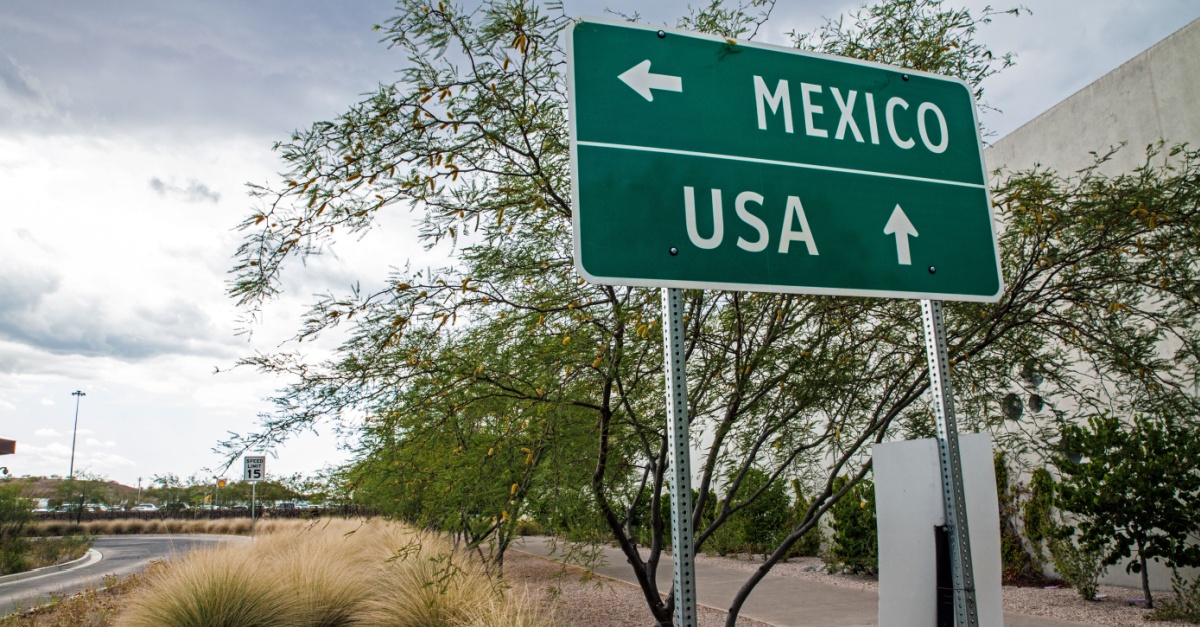

Mexico-U.S. cross-border freight is growing fast. Through July 2025, Mexico represented 15% of all U.S. trade, making it our largest trading partner at nearly double that of China (8%). Nearshoring, expanded manufacturing capacity, and shorter supply chains are pushing more production south of the border and more freight northbound into the U.S. For shippers, that growth creates opportunity but also increases exposure.
Mexico cross-border moves carry added risks that don’t exist in domestic freight. Cargo theft, frequent inspections, and multiple handoff points introduce uncertainty at every stage of the journey. And in the current political environment, new tariffs and stepped-up enforcement by U.S. Customs and Border Protection (CBP) have made the process more rigorous while adding to risk. Labor actions leading to blockades have also put a crimp in cross-border freight into Mexico.
In this environment, visibility is equal parts knowing where your freight is and protecting it. That’s why real-time tracking, geofencing, and proactive alerts have become essential for safe, reliable Mexico moves.
Cargo theft in Mexico is not random, and is growing along with volume. Certain corridors and regions, including parts of Nuevo León, the state of Mexico, Puebla, and Guanajuato, have long been associated with higher risk. Theft tactics range from staged roadblocks and hijackings to terminal theft and insider coordination.
The common denominator in many loss events is delayed awareness. When shippers lack real-time visibility, route deviations or unauthorized stops can go unnoticed until it’s too late. The longer a shipment operates in the dark, the greater the exposure.
Cross-border freight encounters inspections at customs on both sides of the border, along with military and police checkpoints within Mexico. These touchpoints are routine but they introduce variability into transit times.
Without real-time status updates, a routine inspection can quickly cascade into missed appointments, idle warehouse labor, or production delays. Visibility gaps turn manageable delays into operational surprises.
Cross-border moves often involve:
Each handoff is a moment where responsibility shifts and miscommunication can occur. Without consistent visibility across all legs, shipments can “disappear” between carriers or facilities, at least from the shipper’s perspective.
Real-time tracking eliminates blind spots in high-risk areas, providing continuous insight into a shipment’s location and movement. When combined with geofencing, shippers can define approved routes, facilities, and safe zones, receiving alerts when freight deviates from plan.
Unexpected route changes, prolonged stops, or movement outside approved corridors are flagged immediately. This early warning allows teams to intervene before a minor issue escalates into a theft or loss.
Proactive alerts are what turn data into action. Alerts for extended idle times, route deviations, or unauthorized door openings enable logistics teams to respond in minutes, not hours.
Instead of discovering problems after a delivery fails, shippers can contact drivers, coordinate with carriers, or escalate to authorities while recovery is still possible.
Real-time tracking and alerts also help shippers manage inspections and checkpoints more effectively. When a truck stops for an extended period, teams know immediately and can adjust downstream plans accordingly.
Accurate, real-time ETAs allow warehouses, distribution centers, and production lines to stay aligned even when inspections slow progress.
End-to-end visibility is especially critical in cross-border freight, because no single carrier controls the entire move. Tracking across all legs ensures accountability at every transfer point.
Digital documentation and status updates verify custody changes, reduce disputes, and create a clear record of who had responsibility for the freight at each stage. This clarity is essential for insurance, compliance, and customer confidence.
Geofencing adds another layer of protection by enforcing routing discipline and facility controls. Approved yards, border facilities, and delivery locations can be digitally defined, with alerts triggered when freight enters or exits those zones.
Combined with predictive ETA updates, this intelligence improves appointment scheduling, reduces detention, and minimizes the operational ripple effects of delays. This is particularly critical for produce and other time-sensitive freight.
VCPB Transportation specializes in Mexico-U.S. cross-border freight, with deep experience navigating the region’s security, regulatory, and infrastructure challenges. We work with vetted Mexican carriers, secure facilities, and controlled handoff processes to reduce exposure at every stage.
Our end-to-end real-time tracking provides unified visibility from origin in Mexico to final delivery in the U.S., integrating with shipper TMS platforms. Geofencing and proactive alerts help identify issues early, whether it’s a route deviation, a border delay, or an unexpected stop.
Supported by dedicated bilingual teams, VCPB maintains clear, transparent communication throughout the journey. We tailor visibility and security strategies for high-value, high-priority, and time-critical freight, ensuring each shipment receives the appropriate level of oversight.
Mexico cross-border freight will always involve more risk than domestic moves. Theft exposure, inspections, and multiple handoffs are part of the landscape. But risk doesn’t have to mean uncertainty.
Real-time tracking, geofencing, and proactive alerts transform visibility into control — creating safer, more reliable cross-border operations.
VCPB Transportation delivers the visibility, security, and efficiency shippers need to move freight across the U.S.-Mexico border. Start shipping today with VCPB.
VCPB Transportation
600 Meadowlands Pkwy Secaucus, NJ 07094
(201) 770-0111