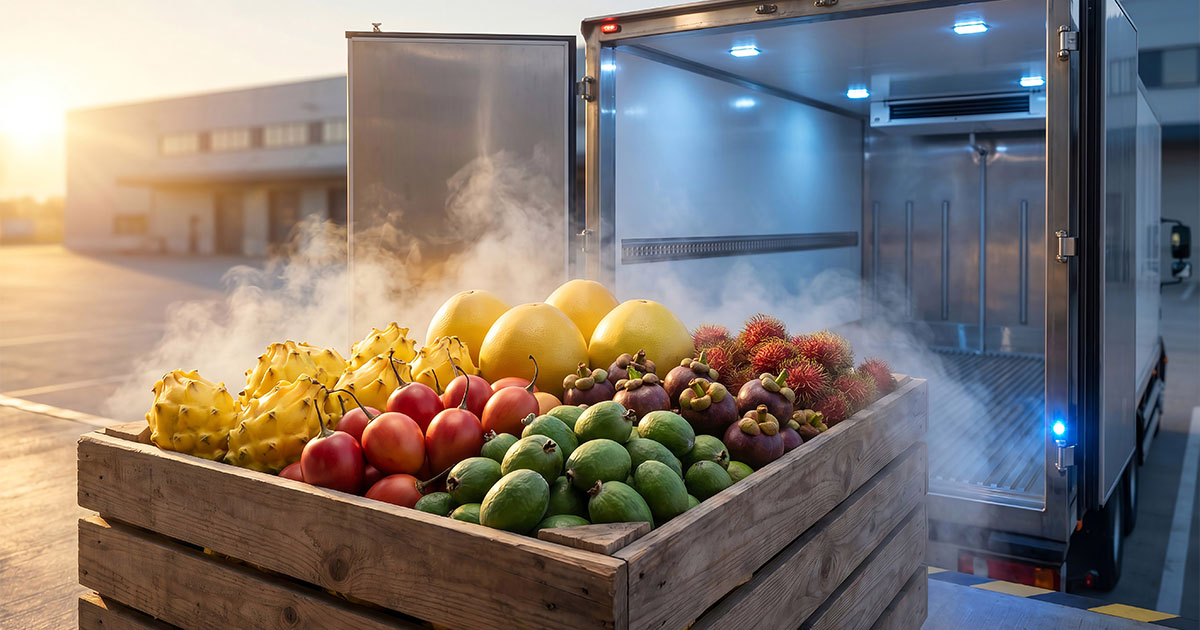

Food safety regulations, retailer requirements, and customer expectations have transformed compliance from a back-office responsibility to a critical component of temperature-controlled logistics.
Success in the cold chain isn’t measured solely by whether a shipment arrives at the correct temperature. Increasingly, shippers, receivers, and regulators expect every stage of the transportation process, from trailer prep and loading to transit and final delivery, to be documented, traceable, and verifiable. Increasingly, monitoring and tracking in the cold chain involves the use of advanced technology such as AI and the Internet of Things (IoT).
As regulatory requirements continue to evolve, food and beverage companies need transportation partners that understand both the operational and compliance demands of moving temperature-sensitive freight. Maintaining product integrity requires more than refrigerated equipment. It depends on disciplined processes, accurate documentation, reliable equipment, and consistent execution throughout the journey.
Over the past decade, food transportation has become subject to greater scrutiny. Compliance now extends well beyond meeting federal regulations. Today’s shippers must also account for:
Failing to meet these expectations can have significant consequences, including shipment delays, rejected loads, retailer chargebacks, increased liability, and strained customer relationships.
For many food manufacturers and distributors, compliance has become a competitive differentiator. Companies that consistently meet documentation and transportation standards are better positioned to strengthen customer relationships and protect their brand reputation.
One of the most significant developments affecting refrigerated transportation has been the U.S. Food and Drug Administration’s Food Safety Modernization Act (FSMA), particularly the Sanitary Transportation of Human and Animal Food rule.
Rather than focusing only on responding to foodborne illness, FSMA emphasizes preventing contamination throughout the supply chain. The regulation establishes shared responsibilities among shippers, carriers, loaders, and receivers to ensure food is transported under sanitary conditions.
Among its key expectations are:
These requirements influence everyday transportation decisions, from selecting the appropriate refrigerated equipment to verifying trailer cleanliness and confirming temperature settings before loading begins.
Maintaining the proper temperature is essential, but documentation is what demonstrates that the cold chain remained intact throughout transit.
Important records may include:
If questions arise about product quality after delivery, these records help establish whether transportation conditions met the required standards. Without supporting documentation, it becomes much more difficult to verify compliance or determine where problems may have occurred.
Traceability has become another major focus across the food supply chain.The ability to identify where products originated, how they moved through the supply chain, and where they were delivered supports both regulatory compliance and operational efficiency.
Effective traceability often includes:
Strong traceability processes help companies respond more quickly to product recalls, improve receiving efficiency, strengthen inventory management, and better protect consumers when food safety issues arise.
Rather than viewing traceability as an administrative exercise, many companies now consider it an essential component of supply chain visibility.
Even the best compliance program depends on consistent execution. Choosing the right transportation provider plays a significant role in maintaining regulatory compliance throughout the shipping process.
Experienced refrigerated carriers prioritize:
These practices reduce the likelihood of temperature excursions, equipment failures, and documentation issues before they affect product quality. A transportation partner with experience handling temperature-sensitive freight can help identify potential compliance risks early, rather than reacting after problems occur.
Federal regulations establish minimum expectations, but many grocery retailers, food manufacturers, and foodservice distributors require even higher standards. Meeting these expectations requires careful planning before the shipment is ever loaded.
Customer-specific requirements may include:
Confirming customer requirements in advance helps reduce delivery exceptions, rejected shipments, and costly chargebacks while supporting stronger customer relationships.
Compliance begins long before a trailer leaves the dock. At VCPB Transportation, maintaining the integrity of temperature-sensitive freight starts with disciplined planning, careful carrier selection, and clear communication throughout every shipment.
Our team understands the unique requirements of refrigerated transportation and works closely with trusted carrier partners that prioritize equipment maintenance, proper operating procedures, and dependable service.
Throughout transit, we emphasize proactive communication, attention to documentation, and consistent execution to help customers maintain product integrity while supporting regulatory and customer compliance requirements.
Whether moving fresh produce, refrigerated foods, or other temperature-sensitive products, our goal is to provide transportation solutions that reduce uncertainty and help shipments arrive safely and on schedule.
No longer a separate administrative task, compliance has become an integral part of successful temperature-controlled logistics. Strong cold-chain performance depends on multiple elements working together, including:
As food safety regulations and customer expectations continue to evolve, companies that make compliance a priority will be better positioned to protect product quality, reduce operational risk, and strengthen long-term customer relationships.
VCPB Transportation helps food and beverage shippers navigate the growing compliance demands of temperature-controlled logistics through dependable carrier management, proactive communication, and disciplined cold-chain execution. Start shipping with VCPB today.
VCPB Transportation
600 Meadowlands Pkwy Secaucus, NJ 07094
(201) 770-0111

%20Transportation.jpg)