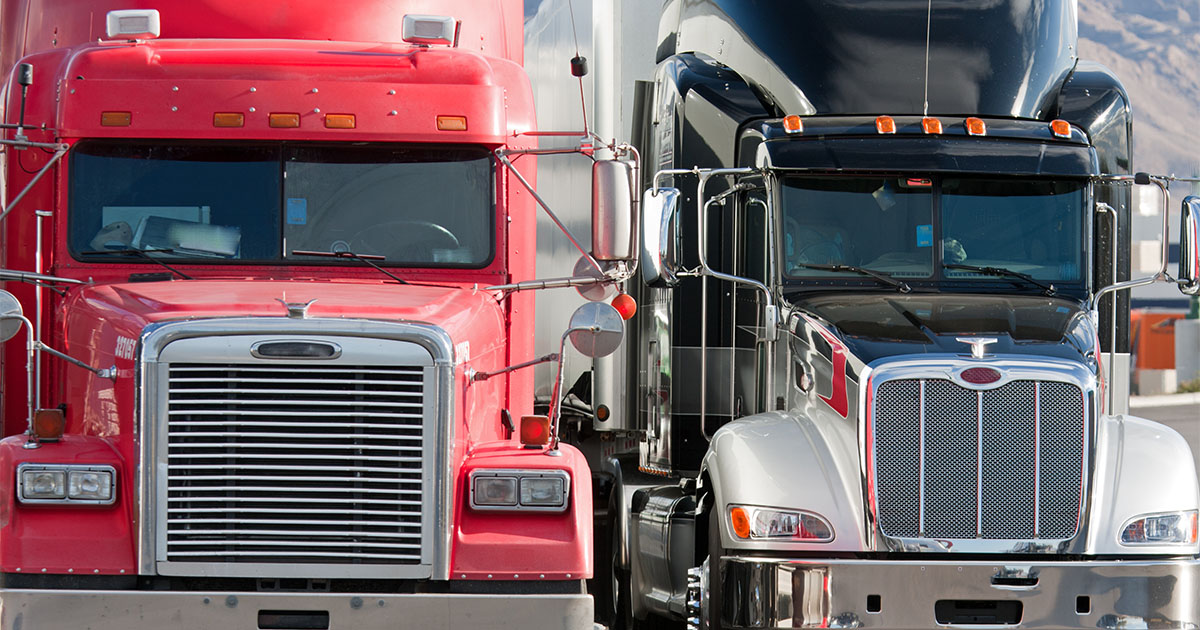

Transportation rates are climbing as available truck capacity continues to tighten. Retailers are pulling in imports, bringing fall, back-to-school, and holiday goods to the U.S. earlier than usual to get ahead of tariffs and ocean surcharges. That front-loaded demand is helping ports, warehouses, and carriers, but it could also mean a softer stretch later in the year.
Spot rates are up in the trucking sector, but DAT’s dry van data indicates that much of the lift is driven by supply strain and AI-related freight, not broad consumer demand. The carrier level is seeing earnings pressured by insurance and claims costs. Policy is shifting too, with the EPA moving to relax heavy-truck emissions rules.
Continue reading to find out more about what is happening in the freight world.
According to the Logistics Managers’ Index, transportation prices remained elevated in June as capacity tightened for the seventh straight month. The transportation prices reading came in at 92.4, just 3.6 points below May’s record, while transportation capacity fell to 30.8 and utilization rose to 74.7. Usage reached 78.8 in the second half of June, the highest level in eight years.
Truckload carriers said tighter regulatory enforcement has tightened supply, which has loosened routing guides and caused shippers to reprice freight. The broader LMI climbed to 71.1, its first reading above 70 since March 2022. Retailers also took on more inventory, stocking up early on back-to-school goods to avoid tariffs and new ocean surcharges.
Retailers are rushing cargo into the country ahead of possible tariff hikes, and U.S. imports are forecast to reach a record 2.47 million TEUs in July, according to the Global Port Tracker released by the National Retail Federation and Hackett Associates. July’s total would eclipse the previous monthly record set in May 2022.
Retailers are preparing for higher tariffs in August and also stocking for back-to-school and holiday demand. Importers also moved early to avoid higher fuel surcharges, with July bunker adjustments potentially adding $300 to $400 per FEU from Asia. The peak season has moved earlier, with imports expected to fall year over year from August through November.
Demand hasn’t collapsed, but rising insurance and claims costs are chipping away at profits at the biggest publicly traded U.S. trucking companies. SEC filings from 10 major carriers, including Old Dominion, J.B. Hunt, XPO, Saia, Knight-Swift, Schneider, and Werner, found that combined net profits declined by almost 47% from 2021 to 2025. Profits declined to $2.2 billion from $4.2 billion, and three of the 10 firms showed net losses.
Insurance costs soared 54.4% to $1.53 billion from $992 million, far outpacing revenue growth of 9.95%. Costs are being driven significantly by increased liability claims, litigation costs, reinsurance pressure, and nuclear verdicts.
DAT’s latest dry van report suggests tight supply is contributing more than broad demand to the recent freight rate surge. The April truck ton-mile index grew just 0.2% month over month and year over year, well below the expansion rates seen in past cycles. Much of the modest increase in demand was driven by freight linked to AI computing infrastructure, while consumer categories remained weak.
Revenue was up 6.4% month over month and 14% year over year, helped by higher rates and fuel surcharges. The national seven-day dry van linehaul rate surged by 7 cents to $2.49 per mile, a 49% year-over-year gain. DAT said carriers could be exposed if AI-related capital spending slows.
The U.S. Environmental Protection Agency proposed easing Biden-era heavy-truck and engine emissions rules introduced in 2023. The plan would relax emissions warranty requirements, give manufacturers more lead time, and allow temporary sales of some diesel engines that can't meet the tougher standards, with penalties attached. EPA Administrator Lee Zeldin said the existing rules are unworkable and estimated the change could save $12 billion or up to $6,000 per truck.
The agency said the revised rule would still achieve nearly 90% of the expected reductions in nitrogen oxides. Environmental groups slammed the proposal as a blow to clean air protections and a drain on public health costs. The action is in line with the Trump administration’s wider repeal of Biden-era clean-vehicle regulations.
We understand that tariffs and trade wars have created an unstable environment, but we can promise you a few things amid this turbulent period. When you call, we answer. No matter the hour. We respond when you have urgent shipping needs. No matter the challenge.
When you work with VCPB, you can always count on:
VCPB Transportation
600 Meadowlands Pkwy Secaucus, NJ 07094
(201) 770-0111

