
For California agriculture, spring into early summer is when multiple high‑value crops come into season at once, turning the state’s fields, orchards, and packing houses into a coordinated rush to feed the country. From berries on the Central Coast to stone fruit in the Central Valley, the pace of harvest and shipping accelerates quickly, and success depends on timing, temperature, and trusted transportation partners.
As a California‑focused cold chain specialist, VCPB Transportation understands how the state’s growing regions work together, and what it takes to keep quality intact from field to buyer during the most demanding weeks of the year.
California has an outsized role in supplying fresh produce to the U.S. A key reason is the way its growing regions complement one another.
The result is a series of seasonal handoffs that keeps store shelves and restaurant coolers stocked nearly year‑round. But spring into early summer is uniquely intense: multiple regions are active at the same time, and several marquee crops compete for cooling, labor, and refrigerated capacity.
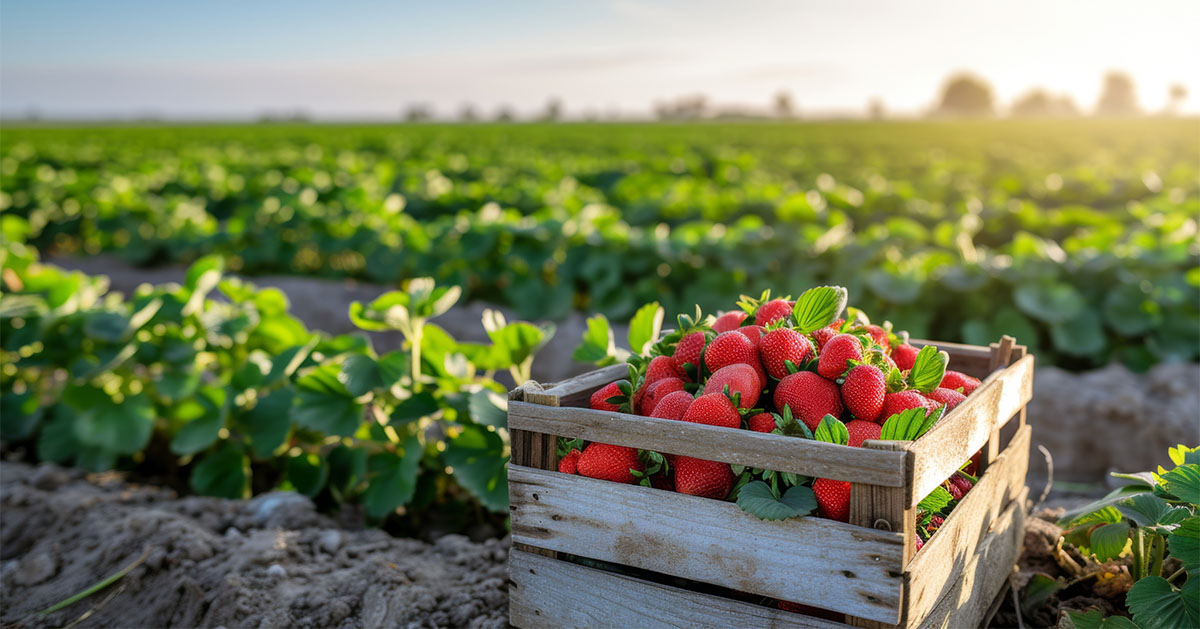
Berries are the early‑season stars, and strawberries lead the way. Main strawberry production is centered in Watsonville/Salinas, Santa Maria, Oxnard, and surrounding Central Coast areas. Volumes build sharply in late spring, with strong movement typically running through early summer.
The market backdrop includes a robust forecast, continued organic expansion and strong domestic demand. Consumers increasingly see berries as an everyday staple rather than an occasional treat.
As strawberries peak, blueberries and raspberries build, giving retailers and foodservice operators a full berry set for Memorial Day, the Fourth of July, and summer desserts, salads, and snacking.
This level of promotional focus also raises the stakes on logistics. Berries are highly perishable, and the window between “peak flavor” and “overripe” is short. Reliable cold chain handling is essential to protect quality and minimize shrink.
Nothing says “California summer” quite like peaches, nectarines, plums, and apricots, which are seeing an early start this year. Most of this fruit comes from the Central Valley, especially Fresno, Kern, Tulare, and nearby counties. Many orchards are still family run, with operations built around long-standing seasonal patterns: pruning in winter, bloom in early spring, and a fast ramp‑up of harvest as temperatures warm.
For retailers and consumers, expectations for flavor, juiciness, and color are high, and any misstep in harvest timing or post‑harvest handling is quickly noticed. This makes temperature control, careful loading, and consistent transit times critical from the Central Valley to distribution centers across the country.
Two more high‑value categories come into play during this same period: cherries and table grapes.
Cherries have one of the shortest, most intense windows of any California crop, typically in late spring. The crop is acutely sensitive to rain and temperature swings, which can impact both yields in the field and pack‑outs in the shed. Because the season is brief and volumes are concentrated, both domestic and export buyers compete heavily for fruit while it’s available. Solid cold chain execution — fast cooling, tight loading schedules, and reliable line‑haul capacity — helps protect a crop when every day truly counts.
Early table grape volumes kick off in southern and central San Joaquin Valley areas, then gradually build as the season progresses. California’s table grapes enjoy growing global demand and a reputation for quality and consistency. The dynamic for transportation is one of rising intensity: early, lighter movements transition into heavier shipping as more varieties and districts come online.
There are weeks when cherries, early grapes, and stone fruit are all moving at the same time, on top of peak berries and steady vegetable volume. For marketers and retailers, this is prime time for national promotions.
For logistics, it can be a pressure test as capacity tightens, and cooling and loading schedules stack up. Transit delays or temperature deviations carry a higher financial impact. That’s where experienced, California‑focused refrigerated carriers make a measurable difference.
While fruit often grabs the headlines, leafy greens and core vegetables are the steady backbone of California’s fresh produce movement. Key items include lettuce, broccoli, cauliflower, and celery.
Production follows a clear regional transition:
These commodities are “anchor” items for produce departments. Weather events in either the desert or Salinas — heat waves, cold snaps, heavy rain — can quickly change supplies and quality, with ripple effects on availability and pricing across the country.
Across all of these categories, the distance between “peak season” and “past prime” can be measured in days or even hours. Harvest timing, precooling, and careful post‑harvest handling all influence flavor, shelf life, appearance, and waste and claims.
That’s where VCPB Transportation fits in. As a cold chain specialist focused on the cornucopia of California agriculture, we work with growers, shippers, and buyers to:
Understanding California’s seasonal calendar is a planning advantage. Retailers and foodservice operators use it to schedule ads, build assortments, and time promotions. Growers and shippers use it to align harvest plans, packing operations, and transportation needs.
VCPB collaborates with customers ahead of each season to:
Right now, California is entering one of its most important produce windows of the year. Berries, stone fruit, cherries, early grapes, leafy greens, and vegetables are all in play, defining the spring and early summer landscape for produce buyers nationwide.
For California growers, this is a critical revenue period. For national buyers, it’s the time to lock in the best combination of quality, availability, and promotional excitement. For both, having a transportation partner that understands California’s fields, seasons, and cold chain demands is essential.
VCPB Transportation is a trusted specialist in California produce and temperature‑controlled logistics. Now is the time to start planning and booking for upcoming California produce peaks. Connect with VCPB now to ensure your fruits and vegetables move on time, at the right temperature, and at their very best.
VCPB Transportation
600 Meadowlands Pkwy Secaucus, NJ 07094
(201) 770-0111

