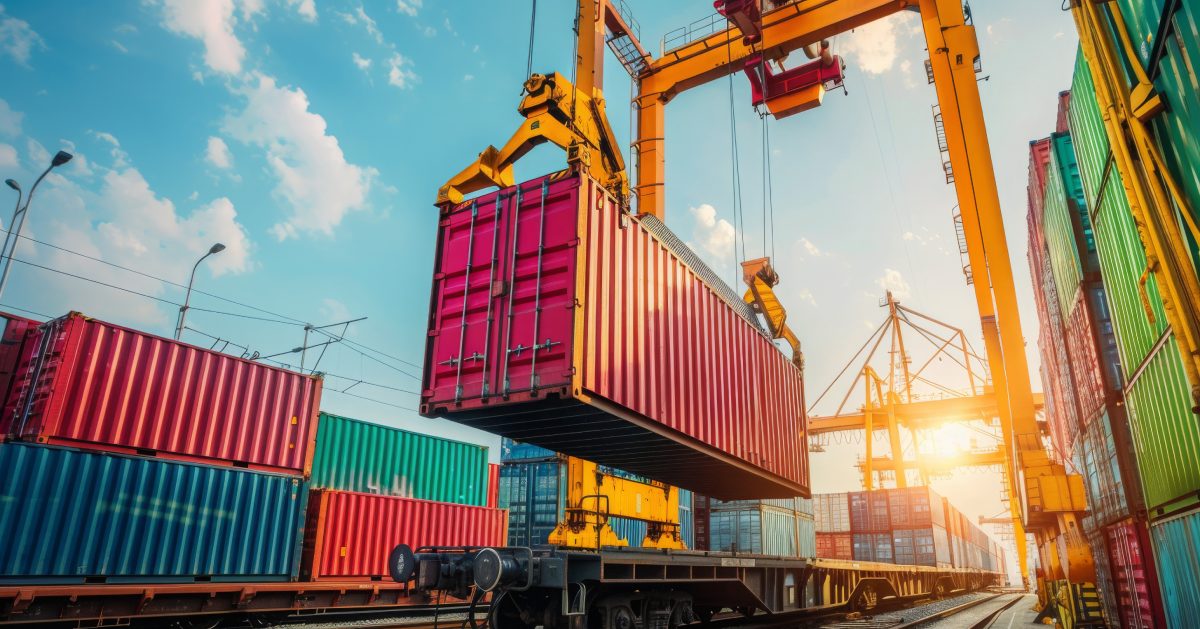

Intermodal transportation is often viewed simply as a mode choice: move freight by rail instead of truck. But for shippers focused on controlling transportation costs, intermodal is better understood as a cost strategy.
Moving a container by rail for the long-haul portion can cost less than moving the same freight entirely by truck. However, the lowest rail linehaul rate does not automatically produce the lowest total logistics cost. The economics depend on distance, shipment characteristics, fuel costs, drayage, terminal locations, transit requirements, and freight volume.
Effective intermodal planning means optimizing the entire door-to-door move, not choosing rail because the rate is lower.
The basic intermodal model combines three transportation segments:
Rail becomes increasingly competitive with truckload freight as distances increase because trains can move large volumes of freight over long distances with relatively high fuel efficiency. Intermodal can be particularly attractive for longer-haul shipments with predictable schedules, recurring volume, and standardized containerized freight.
Factors that generally favor intermodal include:
But intermodal is not automatically cheaper on every lane. Shorter distances can reduce rail’s economic advantage, while complicated pickup and delivery requirements can increase drayage costs enough to offset rail savings.
One of the most common mistakes in intermodal planning is comparing a rail linehaul rate against a truckload quote and assuming the lower number represents the better option. But the real comparison should be door-to-door.
A shipper should consider:
A relatively inexpensive rail move can become less attractive if the origin or destination requires long drayage moves or if terminal access is inefficient. Conversely, freight located close to strategically positioned intermodal terminals can make rail highly competitive.
The objective is to determine the total landed cost, not just the lowest individual rate.
Container utilization is another important component of intermodal economics. Transportation costs can remain relatively similar whether a container is full or only partially utilized, so shippers should maximize the available capacity whenever practical.
That means paying attention to:
Efficient loading can reduce the transportation cost per unit or pallet without changing the transportation rate itself.
Heavy commodities require additional planning. Shippers need to understand the applicable rail and highway weight restrictions, equipment specifications, and routing requirements rather than assuming there is a universal container weight limit. Properly evaluating the entire move can reveal opportunities to put more product into each container while remaining within applicable limits.
Recurring freight can create opportunities to consolidate smaller shipments into full containers and establish predictable intermodal schedules. Aligning pickup windows with rail departures and coordinating inbound and outbound flows can improve both transportation economics and operational reliability. But consolidation should not be pursued blindly.
Holding freight simply to fill a container can create additional warehousing, inventory carrying, or customer-service costs. If delaying a shipment saves $500 in transportation but creates $1,000 in inventory or storage costs, the consolidation strategy isn’t actually saving money.
The right question is whether consolidation reduces total logistics cost while maintaining the service level the customer requires.
Intermodal typically involves more handling and terminal transfers than a direct truckload move. That additional complexity has an economic value that should be included in the transportation decision.
Shippers should evaluate:
For high-value or time-sensitive freight, paying more for truckload may ultimately be cheaper if it prevents a missed delivery appointment, production interruption, or additional inventory requirement. But if it’s predictable freight with flexible delivery windows, intermodal’s lower transportation cost can make a compelling economic case.
The best intermodal opportunities aren’t necessarily the lanes with the longest rail mileage. They’re the ones where the origin and destination align efficiently with the available rail network and drayage markets.
Shippers should evaluate:
This is why intermodal often works best as a selective component of a broader transportation strategy rather than as a wholesale replacement for truckload.
Intermodal can substantially reduce transportation costs when distance, freight characteristics, volume, and network conditions align. But the savings come from optimizing the entire move. You shouldn’t be choosing rail just because of a lower linehaul rate.
The most effective strategy evaluates rail, drayage, equipment, terminal access, transit time, and shipment planning together. For some freight, truckload will remain the better economic choice. For other lanes, intermodal can provide meaningful transportation savings without sacrificing the service level the supply chain requires.
VCPB Transportation helps shippers identify where intermodal can deliver the greatest economic value, then coordinates the entire move from origin drayage and rail linehaul to destination delivery.
With transportation expertise and access to multiple capacity options, VCPB can evaluate each lane based on cost, transit requirements, equipment availability, and service expectations, helping shippers choose the right combination of rail and truck rather than forcing freight into a single mode. Start shipping with VCPB today.
VCPB Transportation
600 Meadowlands Pkwy Secaucus, NJ 07094
(201) 770-0111

