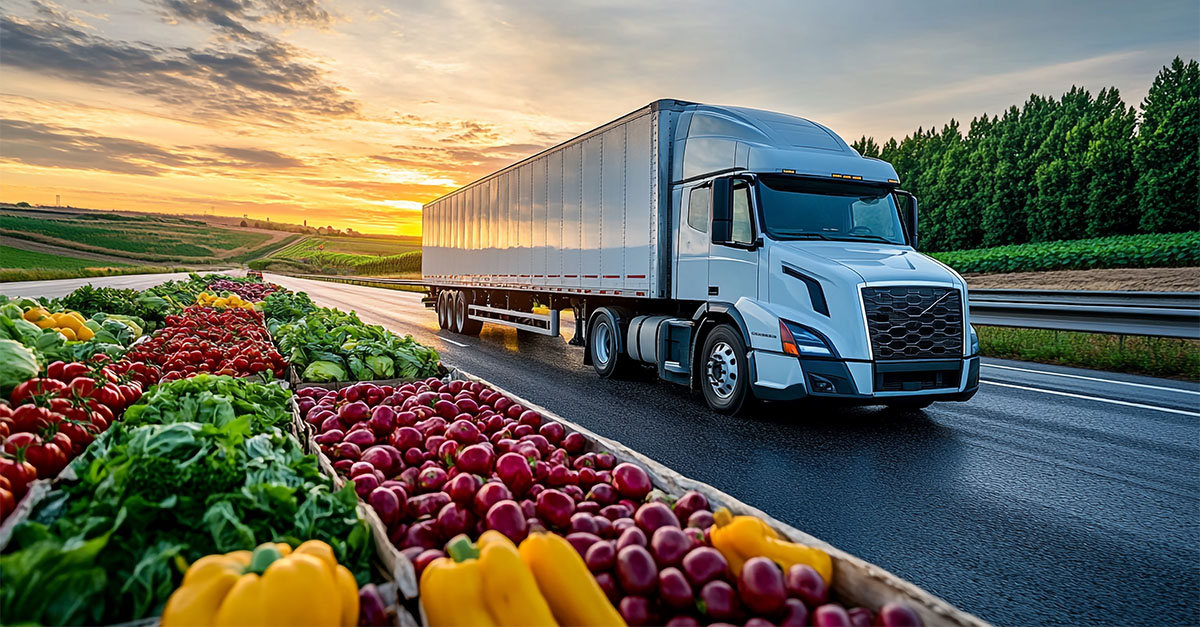

California’s produce industry operates on a fast-moving seasonal calendar. As strawberries, stone fruit, grapes, leafy greens, and vegetables reach peak harvest periods, growers and shippers face a familiar challenge: securing dependable refrigerated transportation capacity to move products to market.
Unlike many types of freight, fresh produce has little room for delay. A missed pickup, a late delivery appointment, or a disruption in the cold chain can quickly result in reduced shelf life, quality concerns, rejected loads, and lost revenue.
Successfully navigating the California produce season requires more than simply finding available refrigerated trucks. It demands proactive capacity planning, flexible transportation strategies, and disciplined execution from harvest through final delivery.
Produce seasons can create sudden and significant shifts in transportation demand. Harvest volume often does not increase gradually. Instead, changing weather conditions, crop maturity, retail promotions, export activity, and holiday demand can cause shipping volumes to surge within a short period of time.
When multiple commodities enter their peak shipping windows simultaneously, competition for refrigerated equipment intensifies. The challenge is not only locating available trucks but securing the right equipment, in the right region, at the right time.
During California produce peaks, shippers commonly face several operational pressures:
As capacity tightens, transportation providers that understand the demands of seasonal produce become increasingly valuable.
Many produce transportation challenges begin weeks before the first shipment is ready to leave the field. The most successful produce programs rely on early communication between growers, shippers, and transportation partners.
Effective planning includes forecasting expected harvest volumes, identifying likely shipping windows, anticipating seasonal demand spikes, and confirming carrier capacity in advance.
For example, periods surrounding Memorial Day and the Fourth of July often create additional transportation pressure due to increased consumer demand and retail promotions. Likewise, regional transitions between growing areas can rapidly shift where equipment is needed and how capacity is allocated. Shippers that wait until harvest is at full production to secure transportation may find themselves competing for limited reefer availability.
Once produce is harvested, every hour matters. The transportation process must align with harvest schedules, precooling requirements, loading timelines, transit plans, and delivery appointments.
A delay at any point in the supply chain can create a series of additional challenges. A late pickup may cause a missed receiver appointment. A missed appointment may result in additional storage time, rescheduling costs, or reduced freshness when the product finally reaches the shelf.
The cost of losing a single day can be much greater for fresh produce than for many other freight categories. A shipment that arrives even slightly outside the expected delivery window may have less remaining shelf life, reducing its value for retailers and consumers.
A common misconception is that cold chain protection begins when a refrigerated trailer arrives at the loading dock. In reality, maintaining produce quality requires coordination throughout the entire transportation process.
Successful cold chain execution includes:
Temperature control is not simply about having a reefer unit. Instead, it’s an ongoing process that requires attention at every stage of the shipment.
Even well-planned produce programs can encounter unexpected disruptions. Last-minute customer orders, sudden increases in harvest volume, and changes in market demand can quickly outpace existing transportation plans.
At the same time, packing sheds, cooling facilities, and distribution centers may experience seasonal congestion, creating delays during loading and unloading. Receiver appointment availability can also become more limited as distribution networks process higher produce volumes.
Weather creates another major variable. Heat waves, heavy rain, and other weather events can alter harvest schedules, affect crop volumes, and change transportation requirements with little notice.
The most resilient produce supply chains are built around flexibility, communication, and contingency planning rather than assuming every shipment will move exactly as scheduled.
During California’s busiest produce seasons, relationships matter. Shippers should seek transportation partners that offer consistent refrigerated capacity, understand California’s growing regions, and have experience managing the specialized requirements of produce transportation.
Reliable communication, real-time shipment visibility, and the ability to adapt quickly during seasonal volume spikes can make the difference between a smooth harvest season and costly disruptions.
During California produce season, capacity becomes more competitive, timing becomes more critical, and cold chain discipline becomes even more important. The produce itself may be harvested over the course of days or weeks, but successful transportation planning begins long before the first load is ready to move.
VCPB Transportation helps growers, shippers, and buyers navigate California’s busiest produce periods through dependable refrigerated capacity, proactive planning, and cold chain expertise. By focusing on execution from pickup through delivery, VCPB helps customers keep pace with seasonal demand while protecting product quality every mile of the journey.
Preparing for upcoming California produce peaks? Contact VCPB Transportation to discuss capacity planning and temperature-controlled transportation solutions designed to keep your seasonal shipments moving.
VCPB Transportation
600 Meadowlands Pkwy Secaucus, NJ 07094
(201) 770-0111

